Wednesday, November 9, 2022

I Statement Communication.

*We've talked about I-Statements before, but is always a good topic to review.*

How do you talk WITH your students?

Do you talk WITH or AT them?

Have you ever tried an I Statement?


Teaching and utilizing the "I Statement" takes a feeling from blaming to owning. We own the feeling we have and we assert it, not blame it on others. 

I feel frustrated when you choose not to listen to directions because it tells me that you are not focused or ready for the day. I'd like you to take some time to refocus and find a way to help yourself listen better. Maybe you could take a five minute break in the calm down corner.

I statements express a feeling about a situation. They do not shame or blame. 

it's not... 

Why is it you never listen to directions?
Are you even listening to me?
Is there a good reason you aren't listening?
You never listen!

Children (and adults) more often than not will stop listening when a statement is blaming. It is a comment reaction to become defensive, shut down, and not change the behavior.

An I Statement expresses how an action makes someone feel. The feeling belongs to the other person, you cannot tell them it is right or wrong. When you hear a feeling statement you listen from a perspective of understand not defense. 

A mindful way to address a concern is to utilize an I Statement.

I use I Statement at home with my four-year-old all of the time. When she is not listening at bedtime I frequently express "I feel frustrated when you do not listen to my directions to put on your pajamas, because it makes me feel as if you do not care about what mommy is saying." 

I use I Statements so often my four-year-old has caught on and will say "I feel mad." She is getting it!

We can all learn to express feeling in a healthy, non-blaming, and problem solving way. 

Thursday, October 20, 2022

Support v Enabling

 How do you support your child at home? Are you really enabling?

At times it is difficult to tell whether or not we are supporting verses enabling our children's behaviors. As we explore the differences we can learn to build a supportive home and ensure we are not enabling negative behaviors.

The goal of support is to build resilience and develop coping strategies.  

Support should always empower a child to move forward toward greater stability and independence.

When we support a child we acknowledge difficulties yet not eliminate them. We should not be removing obstacles for children but rather teacher them how to navigate and work through them.

Supporting a children means working with a child to overcome obstacles, manage feasr, and build confidence for the future.

It is important to acknowledge feelings and validate them. This does not mean that we encourage the negative or allow them to be presented in a negative way. We can allow difficult emotions as long as we teach children to express them in a healthy way.

We can support children by providing clear, simple, and practical assistance. We can model healthy coping skills.

Ensure that you are providing structure that is appropriate for a child's age and ability. 

Remember to notice the small steps forward and praise the effort even if the outcome isn't to your desired goal yet. Keep coaching through the problems and help them get to where you want them to be.

While setting up structure ensure that you are not enabling negative behaviors by giving in to complaints or demands. It is easy to create peace in the short term but it will cause harm to your structure in the long term.

Address what is going on instead of allowing children to avoid uncomfortable situations. When we do not show them how to address a challenge we inadvertently teach them to cover up what they did or cover up what they forgot to do. Talk through the challenges and address them in real time.

Do not wait. Address things as they happen. Teach children to express feelings in a healthy way. Do not speak up for them when they have the ability to speak for themselves. Allow them the time and space to state and express their own feelings. This will help them take ownership and create a better understanding.

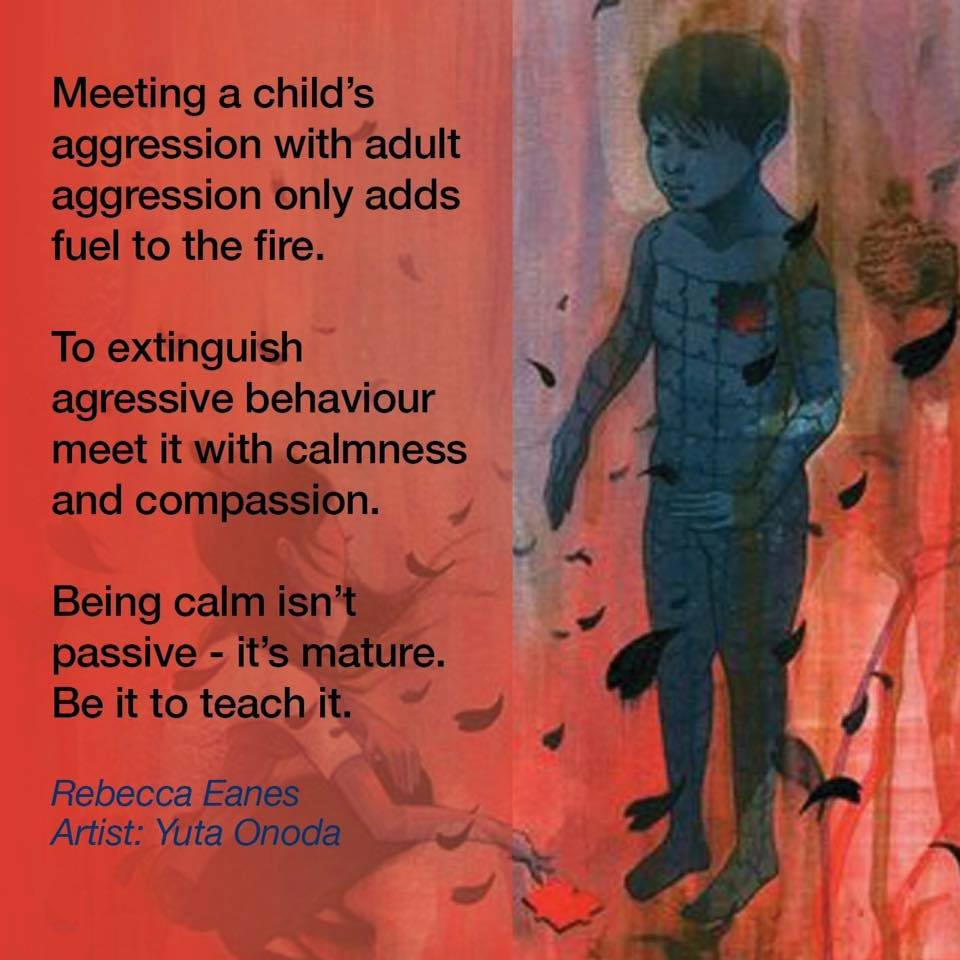
Remember: If you get upset WITH them, instead of staying calm, YOU create emotional fireworks. Avoid the fireworks and stay calm. Show them how to be calm in difficult times and work through the feelings instead of exploding them.

All the children to experience disappointment. You do not need to intervene with other adults, such as teachers. If the other adult needs to address a concern, let them. Do not protect your child from natural consequences. They need to learn how to accept failure, disappointment, and the consequences for their actions. 

Wednesday, October 5, 2022

Invite calm into your home

 Mindful parenting can be challenging. When a child's behavior challenges our calm we are no longer in the present without judgement. We are judging the behavior and in the future with a consequence.

Mindful parenting can be done. We need only take time and practice.

The link below is a great resource to help you get started on mindful parenting.

Mindful Parenting

As I read and took notes I connected with the idea that transitions are not the in-between time, but its own time. This got me thinking of life's transitions. Infancy to Toddler. Toddler to Preschool. Preschool to Elementary. Elementary to Middle school....and this is the challenge. 

If you haven't hit the transition to middle school yet, hold on tight and start preparing now. If you are there, take a deep breath we are here to support you. If you've been there, you know.

One of my favorite quotes is:


Wednesday, September 21, 2022

Taking One Minute

 Today I was reminded of a mindfulness practice that I often forget to utilize.

Savoring.

Savoring is taking a gratitude and extending it. Really think back and be specific. What was happened during the time in which you were grateful? What were the sights? What were the smells? What did you see? How did you feel?

You can also use savoring for in the moment gratitude, not only reflective gratitude.

While you are experiencing something wonderful, take a moment to remember the moment. Take it in with all of your senses. Live in the moment fully.

As an adult caring for children it is hard to find these kind of times. When you are running kids to soccer, school, football, dance, book club, etc, you aren't often grateful for the opportunity to use up gas and time. When you are spending an hour or more making a meal that you know will be inhaled in less than 10 minutes, it's challenging to savor the moment.

After everything you have to do and accomplish take a minute. Even just one. Take a minute and take a deep breath. Savor the minute of breathing. Fully feel and brace the breath. Be thankful for the breath. Savor the moment.

Adulting is hard. Children are challenging. You deserve and need a minute. Take one.


Tuesday, September 6, 2022

Resilience

 Resilience, Harvard Center for Developing Children: The single most common factor for children who develop resilience is at least one stable and committed relationship with a supportive parent, caregiver, or other adult.

Resilience: the compacity to recover quickly from difficulties; toughness.


Returning to school after a break can be a challenge. To help your student build resilience consider taking some time to practice mindfulness at home.

As a school we encourage and utilize mindfulness daily. We have a program called Inner Explorer that teachers are encouraged to use. Mindfulness is a great way to help build resilience. 

Mindfulness is defined as; paying attention (to the present moment), on purpose, without judgement. 

The practice of mindfulness helps create focus, calm, and resilience.

Please reach out with any questions, concerns, or if you would like help connecting with our school mindfulness program. 55.pmckenzie@nhaschools.com 


Tuesday, June 7, 2022

Having A Mindful Summer


Are you ready for a summer of mindfulness? It will help calm your student and help create a peaceful home.

Mindfulness can help your student learn to resolve conflict, take time to calm and focus, appreciate and show gratitude toward others, and get ready to improve grades for the next school year.

Summer never seems long enough...for school staff and students. Don't forget to take time to set up good routine. Including sleep. That is a challenge when kids do not have school. But keeping to a routine helps create balance, calm minds and bodies, and promotes health and wellness. It also gives you time to relax kid free!

Mindfulness doesn't have to end with the school year. The program we use at Fortis, Inner Explorer, has an at home app for free! You can also reach out to me for a link to our school program. Inner Explorer is setting up a summer of mindfulness series. Give your student the gift of focus, calm, and readiness for the next school year.

Have a great summer. See you in the fall for more mindfulness!


Monday, April 18, 2022

RAIN of Self- Compassion


During our moral focus month of compassion this quote above is a great self-reflection as a parent. I know I find times I have to remind myself that I must be the calm in my child's chaos. I need to be the safe harbor in the storm. Do not be the wind ranging but be the lighthouse, steady and calling them to where safety lies.

Mindfulness is a great way to practice self-compassion and help create the space for compassion to a child who seems to have no sense of calm.

We are the teachers. We are the books. We are the lesson they watch and mimic, for better or worse.

A great mindfulness practice for self-compassion is called RAIN

Tara Brach created the RAIN of Self-Compassion mindful meditation. 


Take some time to explore RAIN and show yourself some compassion. The more we learn to give ourselves understanding the better equipped we are to show compassion and understanding to others. 


Intention, Wins, and Reflect and Release

 On the website, cognitivecardiomath.com there is a list of 14 self-care tips for teachers. Reading them I can see where some as not as acce...