Tuesday, June 7, 2022

Having A Mindful Summer


Are you ready for a summer of mindfulness? It will help calm your student and help create a peaceful home.

Mindfulness can help your student learn to resolve conflict, take time to calm and focus, appreciate and show gratitude toward others, and get ready to improve grades for the next school year.

Summer never seems long enough...for school staff and students. Don't forget to take time to set up good routine. Including sleep. That is a challenge when kids do not have school. But keeping to a routine helps create balance, calm minds and bodies, and promotes health and wellness. It also gives you time to relax kid free!

Mindfulness doesn't have to end with the school year. The program we use at Fortis, Inner Explorer, has an at home app for free! You can also reach out to me for a link to our school program. Inner Explorer is setting up a summer of mindfulness series. Give your student the gift of focus, calm, and readiness for the next school year.

Have a great summer. See you in the fall for more mindfulness!


Monday, April 18, 2022

RAIN of Self- Compassion


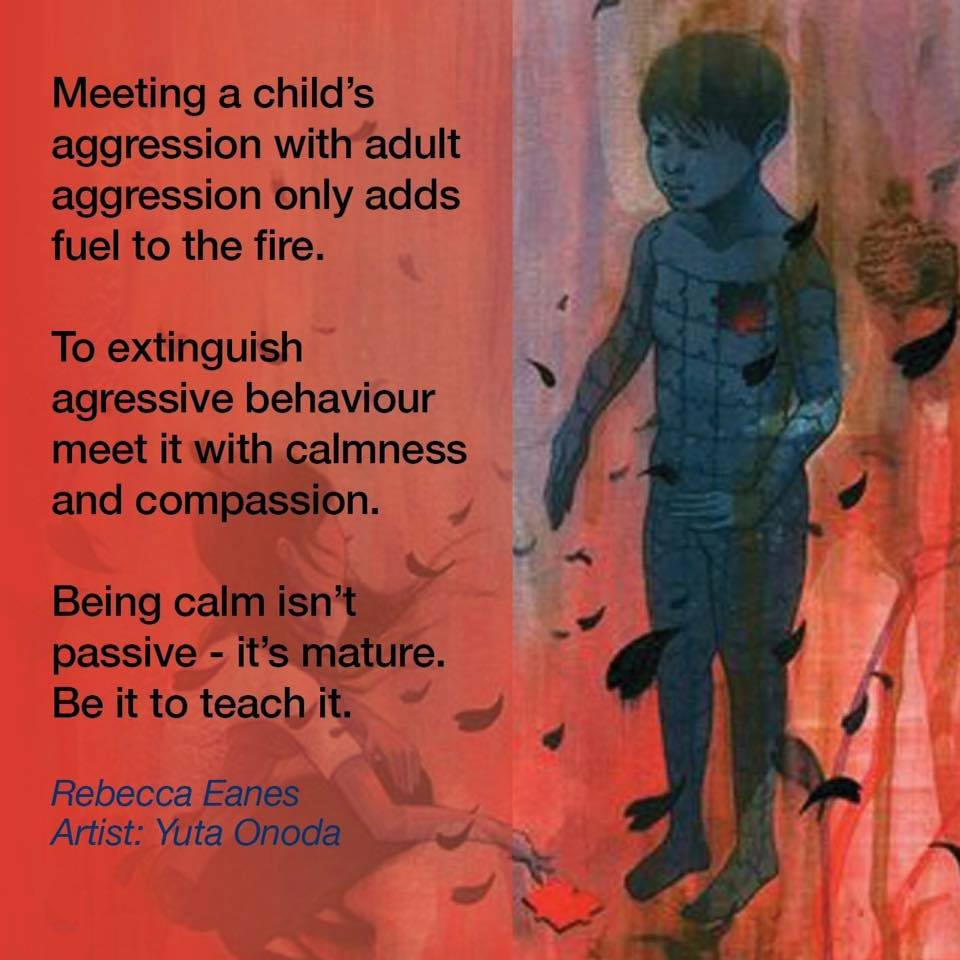
During our moral focus month of compassion this quote above is a great self-reflection as a parent. I know I find times I have to remind myself that I must be the calm in my child's chaos. I need to be the safe harbor in the storm. Do not be the wind ranging but be the lighthouse, steady and calling them to where safety lies.

Mindfulness is a great way to practice self-compassion and help create the space for compassion to a child who seems to have no sense of calm.

We are the teachers. We are the books. We are the lesson they watch and mimic, for better or worse.

A great mindfulness practice for self-compassion is called RAIN

Tara Brach created the RAIN of Self-Compassion mindful meditation. 


Take some time to explore RAIN and show yourself some compassion. The more we learn to give ourselves understanding the better equipped we are to show compassion and understanding to others. 


Tuesday, March 1, 2022

Pack your Mindfulness Parachute

 February flew by and for as short as it was, it was packed. I am sorry that I missed posting last month. I will make it a personal goal to post more this month.

I want to share with you something that I shared with the staff this week.

The idea of packing your mindfulness parachute. 


Opening our minds to the practice of mindfulness can be as life saving as opening a parachute. 

Our minds, emotions, and bodies need the safety of a well packed parachute and a working ripcord. 

What does it mean to pack your mindfulness parachute? It's really easy.

-Pick a specific reoccurring time each day and set it aside for mindfulness. 

-Create a space that is calm, quiet, and allows for focus on mindfulness.

-Journal your journey. Follow up with yourself before and after mindfulness and track your progress.

-Have others check in with you on the progress. A second set of eyes can give a new perspective. 

-Keep at it.

This month we are having a classroom mindfulness challenge. We are asking teachers to utilize Inner Explorer daily to help build a routine of mindfulness. You too can use the program at home. There is a free app called Inner Explorer @ Home

Good luck and let me know how the journey begins and keeps going.

Wednesday, January 12, 2022

Extending Gratitude

 As we continue walking through the new year, let's continue to look at our bite-size mindfulness.

This week is extending last week's gratitude mindfulness. 

Our challenge is to extend gratitude to others, especially our children.

As you consider this mindfulness I want you to be open to the task. It is easy to make a list and state "I am grateful for my family" but it is another thing to then express that to your family. As a parent I know that there are some days it is difficult to extend gratitude to children. But they need it.

On The Child Mind Institute website we are presented with helpful tips on growing gratitude in children. The first tip is to set the example.

When we think about setting the example we first consider just being a grateful person and saying please and thank you to other adults. This is a simple task compared to looking at a child and genuinely expressing gratitude. Saying "Thank you for having a great day at school" "Thank you for being kind to your sibling", even saying thank you for chores that are expected of them. 

In my research on this topic I was presented with an idea that I did not agree with but understand the concept. I want to take the concept and change it up a little and make it better.

On the website Fatherly.com an article discussed the topic of building up grateful children. The author of the article stated that sometimes it's ok for children to "fake gratitude." When explained the author posed the scenario where a child receives a gift from grandma and it was a gift the child did not like. The author states that the child should say thank you and pretend to be grateful. I get it. But I want to look at it a different way.

Let's teach our children to be grateful for the time, thought, and money spent. Let's talk with our children about be grateful for having the grandmother try. Or simply being grateful for having a grandmother. 

Teaching our children to think of more parts than the present itself opens the child to a bigger world than themselves.

When we simply focus on the gift and a fake gratitude we teach the children that the gift was all that mattered. Teach them that the person giving it matters. That person's time matters. That person's money matters. And our genuine heart of gratitude matters.

When we practice gratitude as a mindful moment we take more time to be present in the gratitude and not simply being grateful for show.

Taking time to grow gratitude in children means mindfully living gratitude in our own lives.


Tuesday, January 4, 2022

New Year full of Mindful Opportunities

 Happy 2022.


We are back. Some may be happier about that than others. My three-year-old just wants to skip pre-school and head to kindergarten, my 5th grader is glad to be back with her friends, and my ninth grader is as always indifferent- he attends school for friends and sports.

For some parents there has been anxiety around returning to in-person. For other parents they are glad to have their students returning to routine. 

No matter where you or your student fall on the continuum of happiness to return, Welcome Back!

Having a mindful mindset can help us meet challenging emotions head on. 

Research shows us that pushing aside negative emotions can do more harm than good. Research also shows that allowing negative emotions to control our lives, also does more harm than good. So the question is; what do we do with negative emotions? The answer; we learn to feel them, understand them, and then let them go.

As I came into work today the podcast I started yesterday stopped working. I was frustrated. I started to allow the frustration to distract me. This could have taken over and I could have been a distracted driver. I chose to practice mindful emotional awareness. I stated to myself, I feel frustrated. I continued my self-talk and told myself I could check on the podcast later and reminded myself I had another podcast I wanted to listen to this week. I started the other podcast, took some good breaths and drove calmly and safely.

The better we become, as adults, at identify and expressing our emotions in a healthy way; the better our children will become too.

I work diligently with three-year-old on expressing, identify, and letting go of emotions. When she cries I tell her she can cry if she needs to but that when she is done we need to take a breath and keep going. I tell her that she can be sad when she needs to be, but don't stay sad. I let her know when her behavior frustrates me and I stay calm and give her clear If...Then... statements. I'm not going to tell you it works perfectly every time, but I will tell you it helps me and I can see it helps her.

I will become frustrated from time to time and when I feel it begin to overwhelm me I take big deep breaths and say it out loud. It helps me to regain my perspective. 

As we start a new year, let's take some time to pause, breath, and gain perspective.

Mindfulness works. 

This year I want to try my best to give you some bite-sized mindful moments to carry with you.

This week's bite-side mindful moment is simply an encouragement to take 5 minutes today to be grateful. List in your head or on paper (I use an app on my phone called ReWi) and list 3 things you are thankful for and why.


Thursday, December 2, 2021

Self-Control Mindfulness

December is the month of Self-Control for our moral focus.

Research shows that mindfulness practice will help our ability to show self-control. 

This time of year from many families it is the holiday season. For all of our students it means a two week break from school. The anticipation of these events can lead to a limited ability to remain calm and in control. 

Helping children gain self-control will help calm them and reduce your stress.

Take some time this month to practice calm deep breaths, sitting with ones thoughts and feelings, and taking time away from screens.

I know in my house the older children show less self-control when they are on a screen. My oldest is often reminded of his voice level, his word choice, and the amount of time he is on a screen. Teaching a mindful self-control now will support children as they mature into adulthood. 

If you have a bottle of bubbles at home practice self-control with bubbles.

I like to blow bubbles and have students simply watch them. No popping is allowed. Watching the bubbles creates focus, calm, and self-control. Let the child blow a bubble too. This helps with slow in and out deep breathing.

Mindfulness is a great way to connect as a family and boost self-control during a challenging and stressful holiday season.


Thursday, November 11, 2021

Sharing Mindful Time

 It can be a challenge to find "extra" time in your day. We all feel the rush of the day and the demands to get it all done before we go to sleep. As we think about our time we might take a step back and reflect on our own time on a screen as well as the time our students spend on a screen.

We all spend a lot of time in front a screen. For some it is work based, for many others is it social media based. 

When we evaluate our time and we see social media time we can practice some mindfulness with our time.

We can do this with our students.

This concept is called "Join Media Engagement." This is an idea that we can spend time on a screen with our student.

There are some great mindfulness apps for phones. There are educational games for phones, tablets, and computers. And of course there are the games that children and adults like to play for fun.

Take some time to find a great app or educational game that can be play together and spend time interacting with each other as you spend time on the screens.

Studies show us that we all spend too much time on a screen and not enough time interacting with people, face-to-face. 

Social engagement skills are lacking for so many youth today. The ability to solve conflict and have interpersonal relationships has become more challenging with the increase of social media and gaming.

Joint Media Engagement can also be a great way to check in on your students social media. If you have a set nightly time/weekly time, to have this time you can build in a social media check. 

As a school behavior specialist I am presented with a lot of concerns related to social media conflicts which find there way into the school day. 

Our students often use apps such as SnapChat, TikTok, and Whatsapp to interact with their peers. During these interactions the students are not always kind. Often they feel safe from consequences and are meaner than in real life. 

This mindful family join media time can build a stronger more connected relationship between you and your student, as well as teach them social media behavior and responsibility. 


Intention, Wins, and Reflect and Release

 On the website, cognitivecardiomath.com there is a list of 14 self-care tips for teachers. Reading them I can see where some as not as acce...